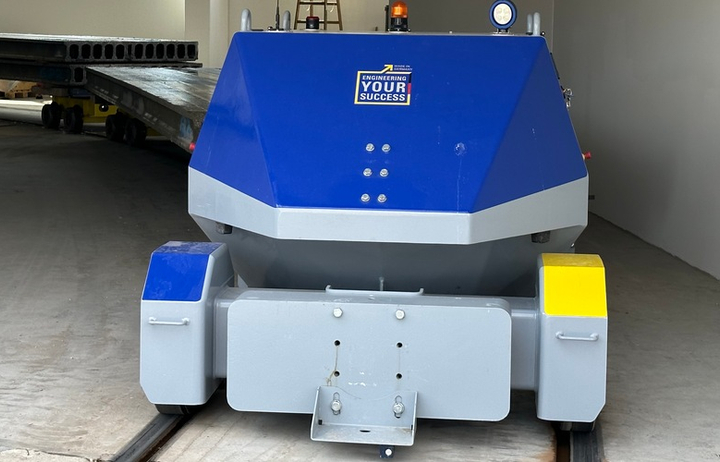



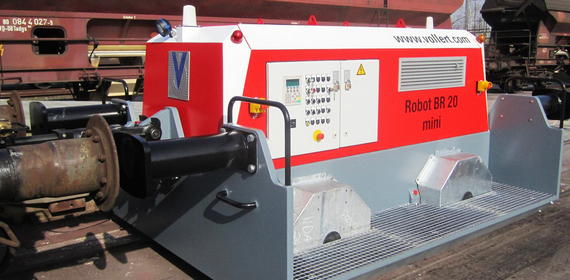
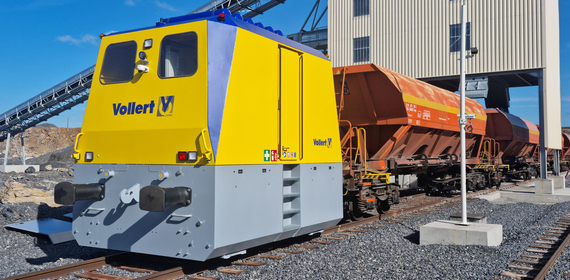
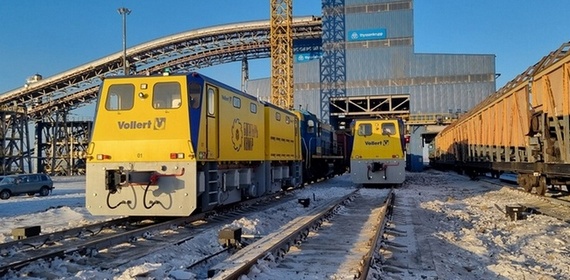


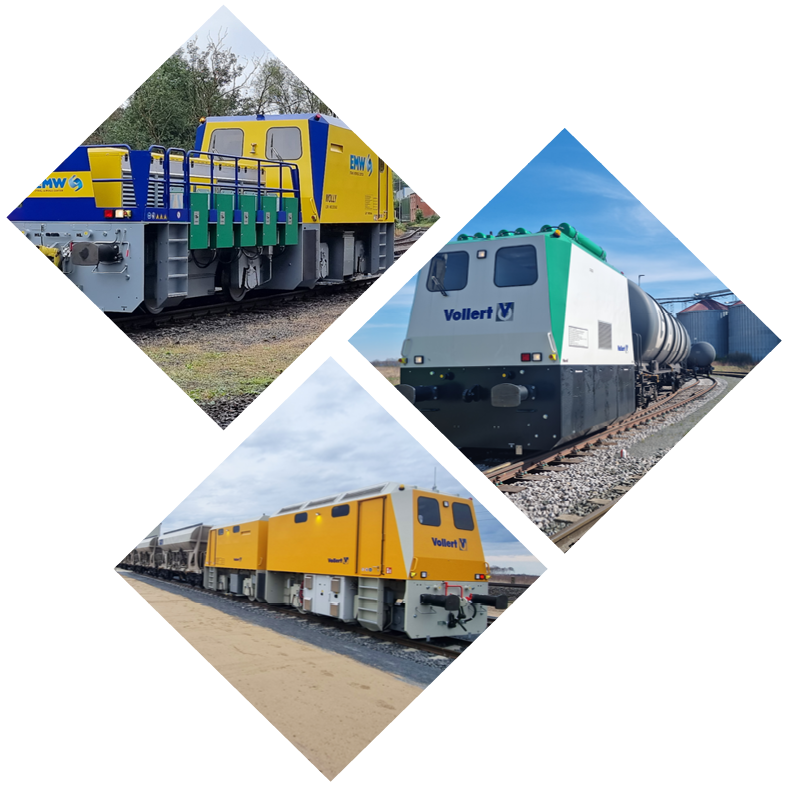

Vollert implements zero-emission shunting technology for Berger Rohstoffe


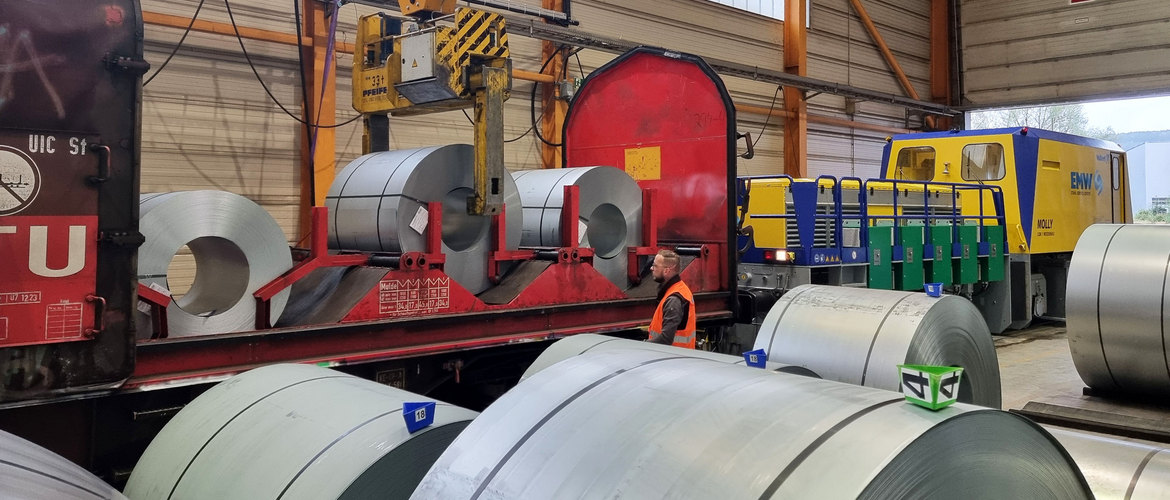
Battery-electric shunting vehicles combine the performance of modern shunting technology with the advantages of an electric drive. They move freight cars without local exhaust emissions and enable shunting operations independent of a permanent power supply via cables or catenary lines.
Moving Heavy Loads, Reducing Emissions
This opens up new options for industrial companies, production sites, and loading facilities that want to make their internal rail transport more efficient and sustainable. Added to this are societal and political developments. Companies are increasingly responsible for transparently tracking their CO₂ emissions and continuously reducing them. ESG criteria are becoming just as important in investment decisions as national and European subsidy programs that support investments in low-emission technologies.
Vollert develops battery-electric shunting solutions tailored to individual requirements—from the required towing capacity and route planning to the appropriate charging and automation concept.
Whether for compact shunting tasks on short track sections or for moving the heaviest freight trains: Vollert’s battery-electric shunting vehicles offer the right solution for a wide variety of requirements. With the COMPACT, STANDARD, and PRO series, we cover a wide range of performance capabilities—tailored to the required traction load, operating conditions, and individual on-site requirements. From the compact entry-level solution to the high-performance BR300 for train loads of several thousand metric tons, our shunting vehicles combine high performance with emission-free, flexible operation.
THE ALTERNATIVE: THE TWO-WAY VEHICLE
Shunting vehicles with dual-mode technology combine a clean electric drive with several other advantages. We designed the VLEX dual-mode robot for rugged, everyday use on rail sidings. All components, including the steel structure, are built to be extremely robust.
At the same time, you benefit from maximum traction and technical features such as the oscillating pendulum axle, which enhances derailment safety. You can safely switch from rail to road in just a few seconds. Find more information about the dual-mode vehicles here >
The performance of a battery-electric shunting vehicle in everyday operation is not determined solely by battery capacity. The decisive factor is the interplay of towing capacity, route profile, shunting frequency, and available charging time.
Several factors are crucial during the design phase:
Based on this information, battery capacity, charging power, and charging infrastructure can be tailored to actual needs. The goal is a shunting solution that reliably delivers the required performance and integrates seamlessly into existing operations.
The choice of battery technology affects not only the initial cost of a battery-electric shunting vehicle, but also its availability, charging characteristics, and ongoing operating costs. In general, lead-acid and lithium-ion batteries differ primarily in terms of charging behavior, maintenance requirements, and cost-effectiveness.
Whether a lead-acid or lithium-ion battery pays off in the long run cannot be determined solely by the purchase price.
Cost-effectiveness is determined during operation
What matters are the total life-cycle costs: energy consumption, charging infrastructure, maintenance, potential battery replacements and replacement purchases, as well as the impact on vehicle availability.
Vollert takes these requirements into account when designing battery-electric shunting vehicles. Together, we analyze your operational profile and develop a battery and charging concept that meets your operational needs.
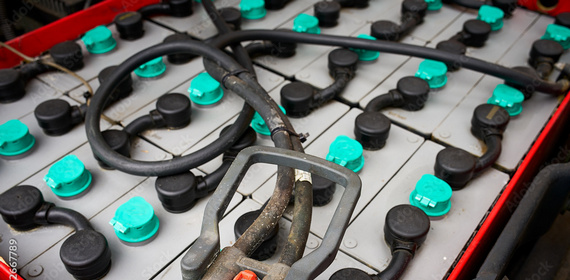
Lead-acid batteries: proven and cost-effective
Lead-acid batteries are a well-established technology and can be a cost-effective solution, particularly for predictable operating times and longer charging windows. Their initial cost is generally lower than that of comparable lithium-ion systems.
However, they require longer charging times. Conventional, open-top designs also require regular maintenance, such as checking and topping off the water level. In cases of intensive multi-shift operation, additional batteries and a corresponding battery rotation and charging strategy may be necessary.
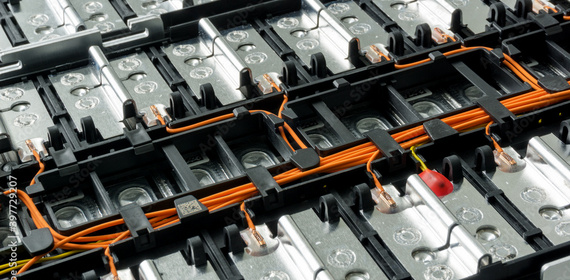
Lithium-ion batteries: flexible and powerful
Lithium-ion batteries often enable shorter charging times and targeted intermediate charging during operational breaks. This allows the shunting vehicle to remain in service longer without necessarily requiring a second battery to be on hand for replacement. In addition, lithium-ion systems typically require less maintenance and often offer higher energy efficiency.
However, this is usually offset by higher initial costs and requirements for a suitable battery management and charging system. The specific cell chemistry, temperature conditions, and the design of the battery system also play a role.
When investing in a new shunting vehicle, the initial focus is often on the purchase price. The concept of Total Cost of Ownership (TCO) takes into account all costs over the vehicle’s lifecycle—from the initial investment, through energy consumption and maintenance, to availability and productivity.
In industrial shunting operations in particular, ongoing operating costs can significantly exceed the initial investment over many years. Those who compare only the purchase price therefore often overlook significant potential savings.
Cost-effectiveness also means availability
Unplanned downtime can disrupt material flows and delay production processes. Intelligent diagnostic and maintenance systems help reduce the risk of breakdowns and enable better planning of maintenance measures.
Furthermore, the precise controllability of electric drives enables smooth, reproducible movements. Shunting and loading processes can be better automated, and material flows organized more efficiently. This, too, results in economic benefits.
National and European incentive programs support investments in low-emission technologies. Depending on the country and the terms of the incentives, grants or low-interest financing can reduce investment costs and shorten the payback period. Therefore, incentive opportunities should be factored into investment planning at an early stage.
The decision regarding a shunting solution should not depend solely on the purchase price. Energy consumption, maintenance costs, availability, productivity, automation, and potential for funding determine the actual cost-effectiveness. A thorough TCO analysis provides a solid foundation for long-term investments. Battery-electric shunting solutions can prove compelling not only from an environmental perspective but also economically over their entire lifecycle.
Sustainability is increasingly becoming a key competitive factor for industrial companies. Climate protection goals, legal requirements, and rising expectations from customers and investors are increasing the pressure to systematically track and reduce CO₂ emissions. ESG strategies, CO₂ footprints, and sustainability reports are therefore becoming increasingly important in investment decisions as well. In addition to production facilities and buildings, internal transportation and shunting processes also contribute to energy consumption and CO₂ emissions.
Intra-facility rail transport also counts
Diesel-powered shunting vehicles, in particular, generate significant emissions over their service life. The switch to battery-electric shunting technology enables locally emission-free operation. Using electricity from renewable energy sources or the company’s own photovoltaic systems can further improve the carbon footprint. At the same time, noise and pollutant emissions on the plant grounds are reduced—a benefit for employees and the surrounding community.
Modern battery-electric shunting vehicles demonstrate that climate protection and performance are compatible. High-performance electric motors deliver high torque right from the start and enable reliable and precise operation even with heavy train loads.
Intelligent control systems, efficient battery storage, and energy recovery help to use energy strategically and optimize material flows. Predictable charging cycles and reduced maintenance requirements further improve resource efficiency. Sustainability goals are achieved while simultaneously making processes more cost-effective and reliable.
A Holistic Approach to Sustainability
The electrification of shunting operations is thus more than just a measure to reduce CO₂ emissions. It strengthens the sustainability balance, supports the achievement of corporate climate goals, and lays the foundation for efficient, future-proof logistics processes. Environmental responsibility and economic success thus become two sides of the same strategy.
In addition to the drive system, numerous technical components are key to the reliable performance and safe operation of a shunting vehicle. Learn more about the technical features of Vollert shunting vehicles—from shunting couplers and track gauge to mechanical and pneumatic systems, and on to control and operation.
Vollert’s shunting vehicles can be flexibly adapted to the existing track infrastructure. Our vehicles are designed as standard for the standard gauge of 1,435 mm. In addition, we produce custom designs for broad and narrow gauges as well as for all standard gauges used worldwide. Adaptation to national regulations and customer requirements is, of course, possible.
Whether it’s existing plant railways, industrial rail systems, or international projects with non-standard track gauges—we take the respective infrastructure requirements into account right from the vehicle design phase. This allows the shunting vehicle to be optimally integrated into existing operational processes without requiring extensive modifications to the track infrastructure.
In the mechanical design of our shunting vehicles, we rely on a robust, heavy-duty industrial construction. At the heart of the design is a torsionally rigid, welded steel frame that ensures stability and durability even under high loads and demanding operating conditions. The design is complemented by high-quality components from renowned manufacturers, which are characterized by reliability and a long service life.
The modular vehicle design also makes it possible to retrofit additional functions at a later date, if necessary, and to adapt the vehicle to changing requirements. At the same time, all components are arranged for easy access, allowing maintenance and service work to be carried out efficiently. As a result, Vollert shunting vehicles are ideally suited for demanding continuous operation, even in steel mills, ports, and other industrial facilities.
Vollert’s shunting vehicles are equipped with a high-performance compressed air system that reliably supports the vehicle’s braking and control functions. The system is customized to each specific application and train configuration.
We rely on compressors from renowned manufacturers with integrated compressed air treatment and drying systems. The result is high-quality, oil-free compressed air that ensures the reliable operation of the pneumatic systems and contributes to the vehicle’s high availability.
Depending on requirements, the system can also be equipped with a 10 bar working air supply. This is then also available for pneumatic functions on the railcars.
Vollert offers a variety of manual and automatic shunting coupling systems to ensure a safe and reliable connection between the shunting locomotive and freight cars. The selection and design are tailored to the customer’s specific requirements and the existing railcar fleet. This also includes suitable adapter solutions for different coupling systems.
A particular advantage is pneumatic coupling and uncoupling, which is possible along the entire shunting route. This allows shunting processes to be organized more efficiently and reduces the need for manual intervention. Upon request, the coupling systems can also be integrated into automated loading and unloading processes—ensuring seamless and optimally coordinated operational workflows.
The electric drive system of Vollert shunting vehicles is designed for high tractive forces, precise control, and reliable continuous operation. An electric all-wheel-drive system with frequency-controlled three-phase motors ensures even power distribution to all driven wheels. This provides high traction forces right from the start, while the travel speed can be precisely controlled as needed.
The low-wear electric braking system is supplemented by a spring-loaded parking brake. For even greater energy efficiency, the drive system can be optionally equipped with energy recovery. Additional options, such as a wheel-counter-based slip monitoring system with anti-slip regulation (ASR), a sanding system to increase friction, or a wheel flange lubrication system to reduce wheel wear, allow for targeted adaptation to specific operating conditions.
The control system for Vollert shunting vehicles is based on an industrial PLC from SIEMENS SIMATIC ET200SP. The software is developed according to the Vollert standard and follows a structured, modular architecture. This enables reliable control of all vehicle functions as well as flexible adaptation to different operating conditions. The entire control system is robustly designed for demanding use in industrial environments.
Depending on the vehicle design and customer requirements, operation is carried out via a permanently installed control panel, a cab control system, or external control stations. A modern HMI system enables convenient parameterization and diagnostics, as well as the display of operating states and error messages. In addition, customer-specific interfaces can be individually integrated—for example, for integration into higher-level control and automation systems.
Intelligent automation functions ensure precise, smooth, and repeatable shunting movements. Defined acceleration and braking ramps enable controlled acceleration and deceleration of the vehicle. This allows even sensitive cargo, such as tank cars, to be moved particularly gently and smoothly. At the same time, automated driving strategies reduce potential operator errors and support safe, efficient shunting operations.
For more advanced requirements, the shunting vehicles can be optionally equipped with automatic positioning functions. These enable, for example, precise maneuvering to defined positions at loading and transshipment stations. Operators benefit from high repeatability and consistent process quality, particularly for regularly recurring driving sequences.
Digital features and intelligent service concepts support the reliable and cost-effective operation of Vollert shunting vehicles throughout their entire lifecycle. Remote maintenance is possible via a secure VPN connection, while real-time condition monitoring and diagnostics provide a quick overview of the vehicle’s current status. A cloud-based IIoT dashboard clearly displays relevant operational data and enables its evaluation and analysis.
Vollert also supports its customers during ongoing operations: from commissioning and regular maintenance to targeted fault analysis. By combining digital monitoring capabilities with proactive service concepts, potential problems can be identified early, downtime reduced, and the availability of shunting vehicles sustainably improved.