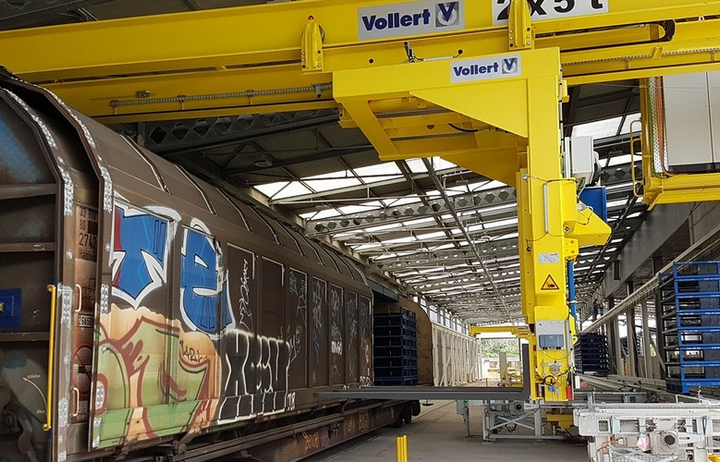
Automated train loading at ŠKODA with Vollert train handlers


In vehicle production, intralogistics determines the production rhythm: Stacks of sheet metal blanks weighing up to 20 metric tons must be ready in the press shop, body parts weighing several metric tons must be in the right place within seconds, and tools must be changed in short changeover times.
Automated material flows in the production plant
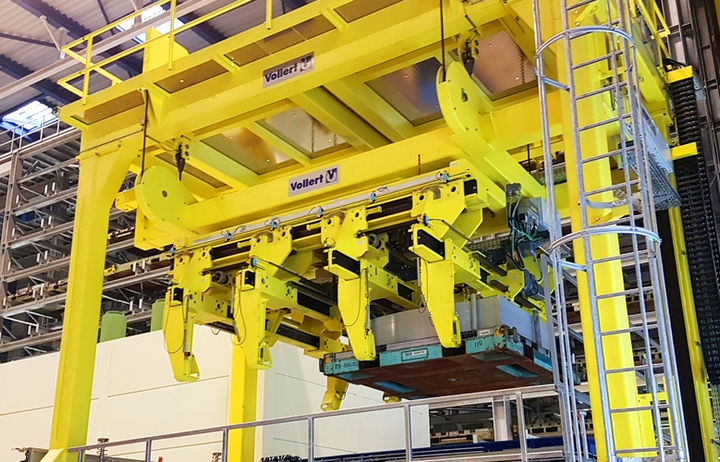
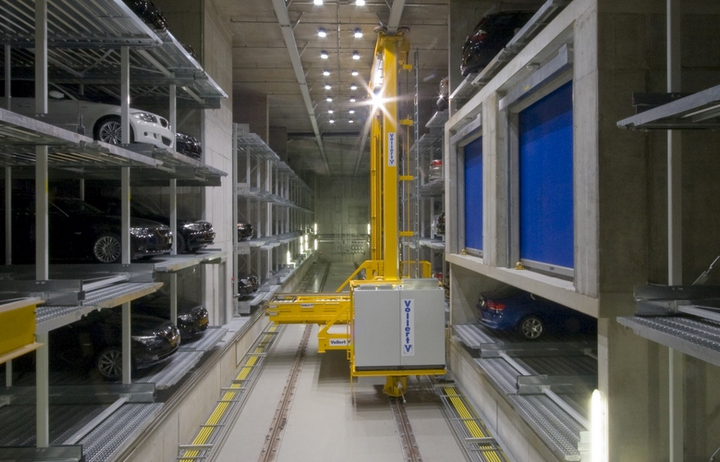
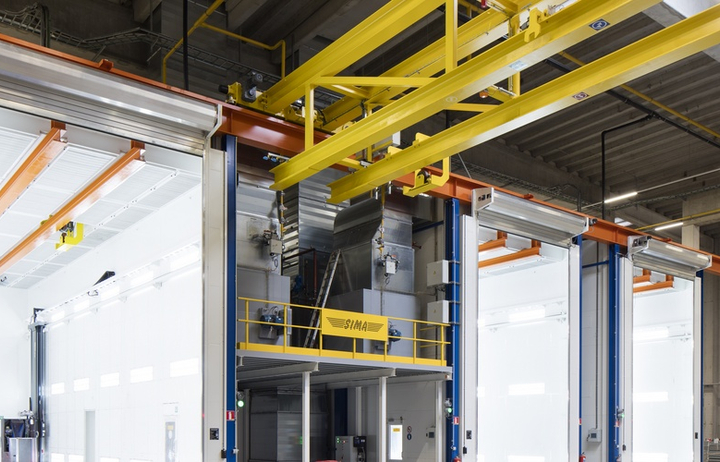
Vollert automates these processes with high-bay warehouses, automated crane systems for parts weighing up to 50 metric tons, and automated guided vehicle systems—from the press shop through the paint shop to the assembly line. Intelligent material flow and control solutions ensure just-in-time and just-in-sequence supply to the production lines and guarantee maximum process stability with maximum system availability.
The result is shorter lead times, reduced inventory, and flexible intralogistics that adapt to changing production programs and the increasing demands of the automotive and commercial vehicle industries.
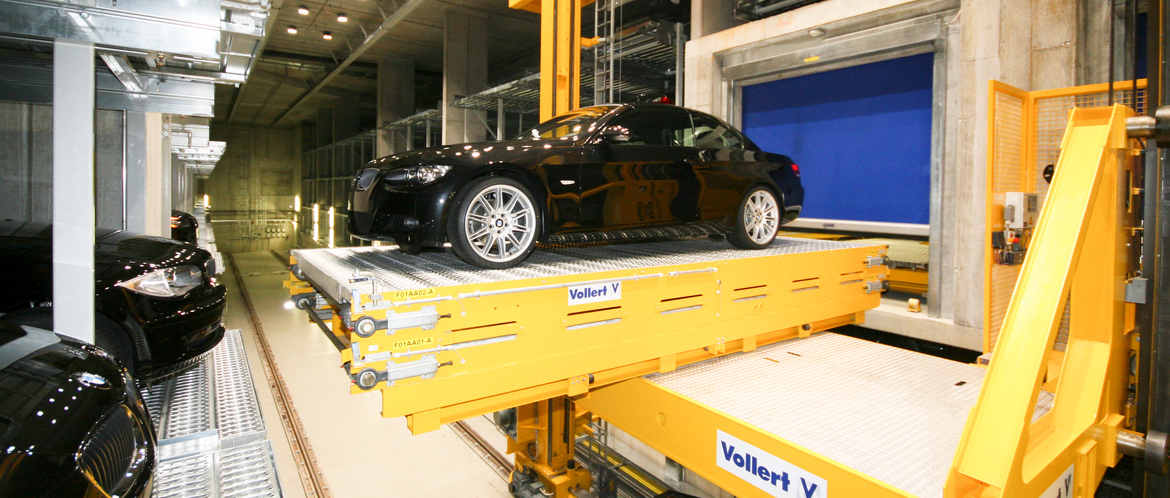
The automotive and commercial vehicle industry enables mobility. While automobiles promote individual freedom, flexibility, and social participation, commercial vehicles ensure the transport of food, medicines, raw materials, and consumer goods, thus forming the backbone of modern supply chains. The industry creates millions of jobs worldwide, drives innovation in technology, safety, and digitalization, and influences numerous other industries.
Intralogistics concepts in the automotive and commercial vehicle industry present specific challenges.
Efficient transport and storage
Intralogistics concepts in the automotive and commercial vehicle industry are particularly characterized by a high degree of variety, just-in-time or just-in-sequence requirements, and close synchronization with assembly processes. Internal logistics must deliver an enormous number of different parts—from screws and cable harnesses to seats and cockpits to engines, axles, and battery modules—reliably, error-free, and at exactly the right time to the respective assembly station.
Product and variant diversity: Modern vehicles are produced in numerous model, equipment, and drive variants. This significantly increases the number of different components and part combinations. Storage systems must therefore be able to efficiently store large quantities of C-parts as well as handle bulky and high-value assemblies.
Assembly cycle orientation: Vehicle production takes place in clearly defined cycle times, often in seconds or minutes. Material flow systems must therefore be highly available, transparent, and controllable in real time. Conveyor technology, tugger trains, driverless transport systems, and autonomous mobile robots must be precisely coordinated.
Just-in-time concepts: Components must not only be delivered on time, but in some cases also in exactly the order in which they are installed on the assembly line. This requires close integration between production planning, warehouse management systems, and material flow computers.
E-mobility: The shift toward electric mobility and alternative drive systems is creating additional challenges. Battery modules, for example, are heavy, sensitive, and safety-critical.
During rapid tool changes in the press shop, the transport of body parts weighing several tons, in the painting process or in the assembly line - the supply chain in modern automotive and commercial vehicle production must be intelligently networked today. At the same time, the automation of all internal material flows is indispensable in order to produce economically. At the same time, however, it is also necessary to strengthen the increasingly important human-machine interaction. Flexible value chains are evolving from rigid warehouse or transport processes.
From small batch sizes in the coating of truck trailers or buses to large-scale series production of electric cars, we develop the optimuml intralogistics concept for this purpose in close dialog with our customers. If requested, equipped with the latest Industry 4.0 control technology.
Many of the world's largest automobile manufacturers rely on Vollert's know-how. In the shortest cycle times, millions of parts have to be transported daily from A to B punctually and damage-free. We are familiar with the logistics processes in the automotive sector and know the requirements of heavy-load logistics in particular.
Whether mega high-bay warehouse in the pressing plant, automatic crane systems for quick tool change or stacking cranes for load carriers, we ensure economical and efficient processes. On request, fully automated and equipped with state-of-the-art industry 4.0 control technology.
We are the pacemaker and secure your supply processes with the latest technology:
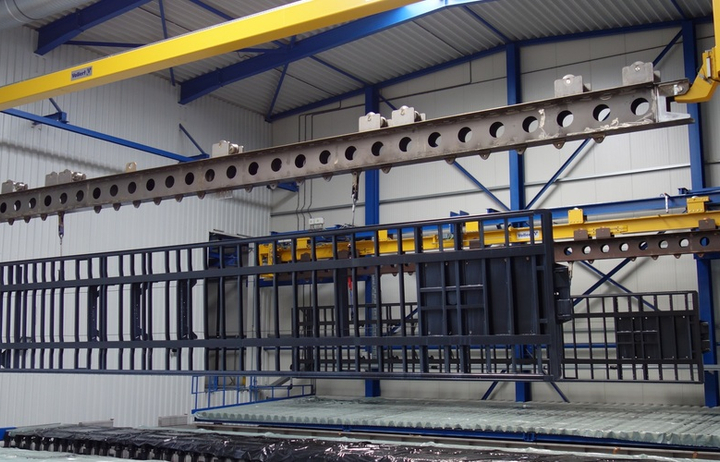
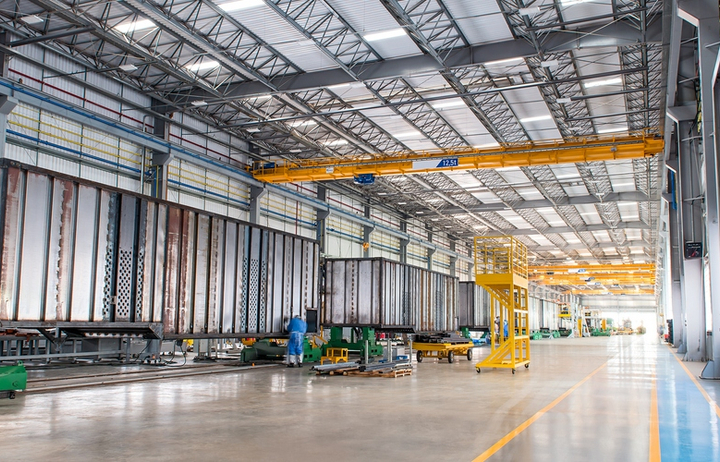
In the series production of truck trailers, robust construction vehicles, modern buses or rail vehicles, material logistics requires real heavy-duty experts. Heavy, often oversized body parts weighing tons must pass through the individual processing steps from the press shop, the painting stations to the assembly line efficiently and as fully automatically as possible, overhead or floor-based.
This is where every second and every millimeter counts in precision. Numerous well-known customers such as Faymonville, F. X. Meiller, EvoBus and Randon in Brazil rely on our technology.
Intelligent logistics from Vollert provides a strong backbone in commercial vehicle production: