
Raw materials and
building materials industry
building materials industry


In quarries, as well as in gravel, cement, and building materials plants, large volumes of material, heavy railcar loads, and demanding operating conditions characterize everyday shunting operations: Raw materials such as limestone, clinker, sand, gravel, and cement are transported in heavy freight cars, while dust, bulk material deposits, and weather conditions such as rain and frost place heavy strain on tracks, switches, and technical equipment.
At the same time, it is essential to make empty cars available, quickly move loaded trains out of the way, and position cars precisely under the loading equipment — all while production continues.
Precisely tailored shunting technology
Vollert designs customized shunting and loading concepts for this purpose that are precisely tailored to the track layout, material type, and required pulling forces — ranging from stationary shunting systems to shunting vehicles and rail-road solutions.
This results in stable, efficient processes that minimize manual shunting work, increase handling capacity, and optimally integrate rail transport into production and shipping.
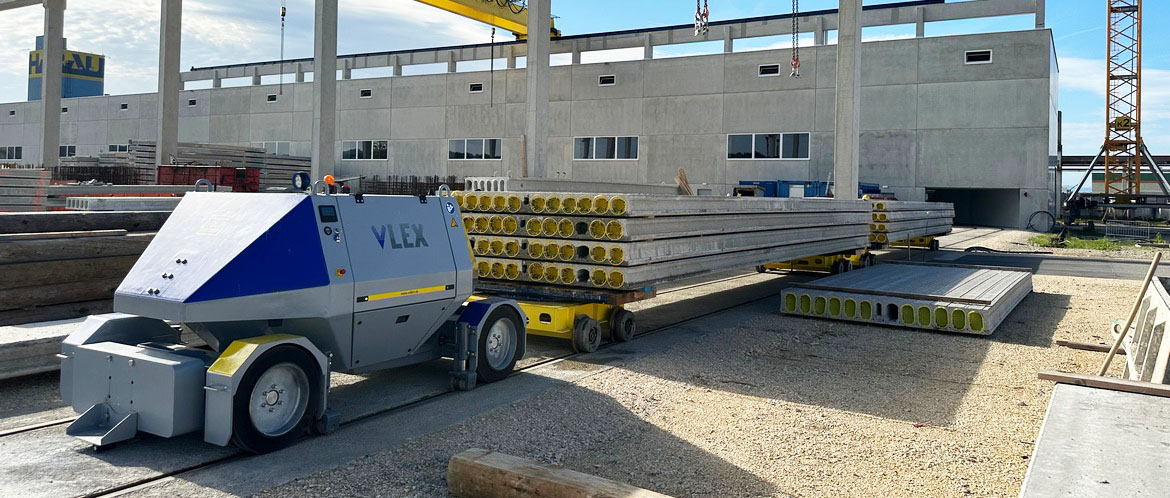
The raw materials and building materials industry forms a fundamental basis for human life and development. It supplies the materials used to build homes, schools, hospitals, roads, bridges, and energy plants, thereby creating the infrastructural foundation of modern societies. Raw materials such as metals, minerals, sand, and gravel are also essential for industry, technology, energy production, and mobility.
Shunting operations in a rail siding in the raw materials and building materials industry present specific challenges.
Efficient shunting and loading
Dust, bulk material residues, and weather conditions in quarries, cement plants, gravel pits, and transshipment terminals have a direct impact on tracks, switches, and coupling devices. Fine lime or cement dust can settle in the moving parts of switches and impair their function. Rain causes contamination or undercutting of the track bed, and in winter, ice forms on switches and brake components.
Mass of transported goods: In the raw materials and building materials industry, bulk goods such as limestone, clinker, sand, gravel, or cement are moved. The freight cars used reach a very high weight when loaded. This means that considerable forces are at work during shunting, especially when starting, braking, or coupling.
Infrastructure: Sidings often run between production facilities, silos, stockpiles, or loading facilities. Space is limited, track radii are tight, and sightlines can be restricted by buildings or material storage areas.
Close integration of rail and production processes: The provision of empty cars, the removal of loaded trains, and temporary storage must be precisely coordinated. Delays in the shunting process have a direct impact on plant operations.
Safety requirements: Shunting operations often involve personnel in the track area, for example when coupling, uncoupling, or securing wagons. This significantly increases the potential for danger.
Economic factors: Rail transport is often used to efficiently handle large volumes over long distances. Any delay in shunting can affect connecting services.
As an innovator and leading technology partner, Vollert develops economical shunting systems for branch lines and connecting railways in the raw materials and building materials industry. We combine passion and expertise with forward-looking ideas to make logistics processes in freight loading reliable and efficient.
You will not only receive our standard solution. We will also develop a shunting and loading concept tailored to your specific track conditions, type of goods, and required tractive force—from stationary shunting systems and shunting vehicles to efficient road-rail vehicles.
 0
Shunting systems worldwide
0
Shunting systems worldwide
 0
Tons and more
0
Tons and more
 0
Years of expertise
0
Years of expertise


