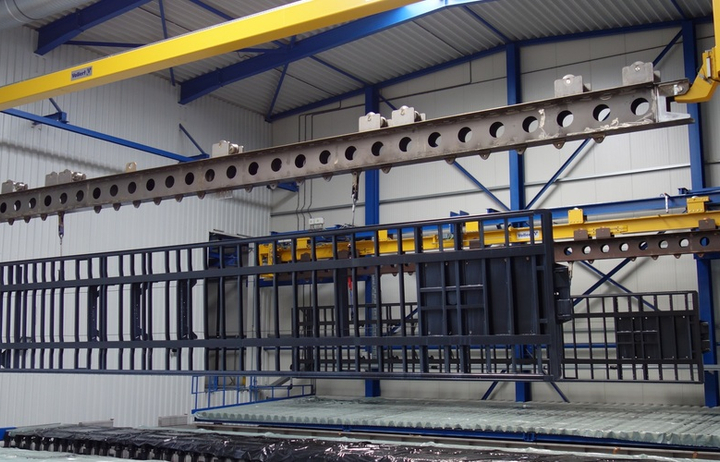
Please blast, dip, powder a 100 times


The demands in surface technology are growing: workpieces are becoming heavier, component geometries more complex, and coating quality requirements more demanding. At the same time, pressure is mounting on lead times, resource efficiency, and equipment availability. Standard crane technology quickly reaches its limits in this environment—not because of insufficient load-bearing capacity, but because process integration, environmental resistance, and control logic cannot keep pace.
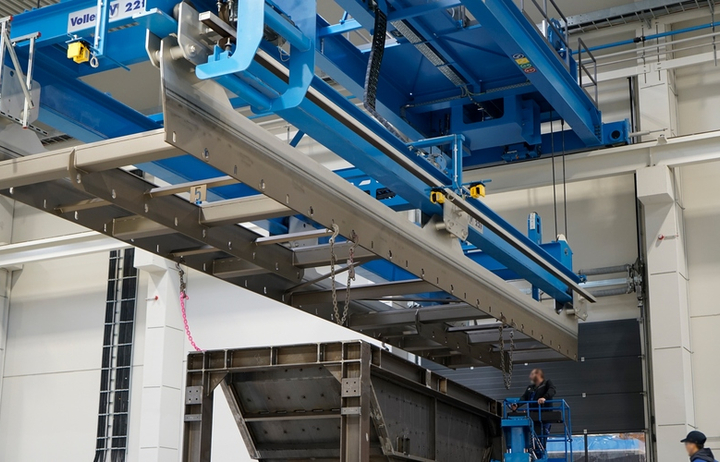
From cathodic dip coating to powder or liquid coating: Vollert develops crane systems that guide heavy workpieces and large components reliably, damage-free, and fully automatically through complex surface treatment plants.
The right crane technology for all coating processes
This means: robust components for aggressive environments, precise positioning within tight process tolerances, fully automated control, and a system architecture that treats the entire material flow—from loading to unloading—as a single, integrated unit.
Not every coating process places the same demands on material flow. The crane system architecture must be tailored to the specific process, the workpiece geometry, and the system's process logic.
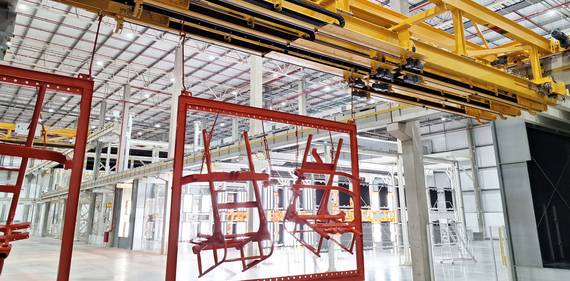
WET PAINTING AND POWDER COATING
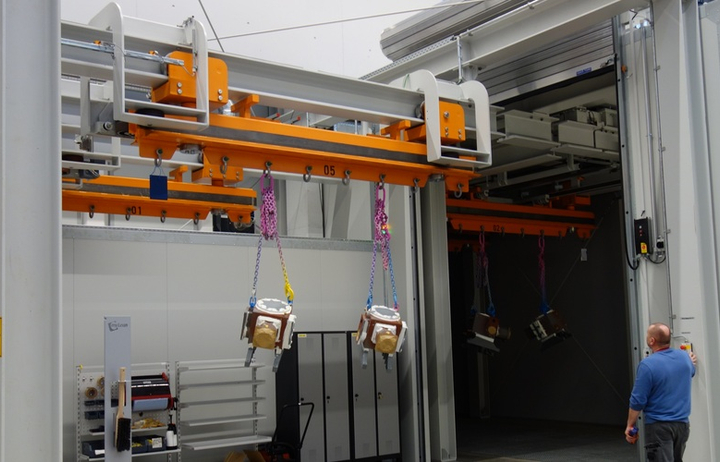
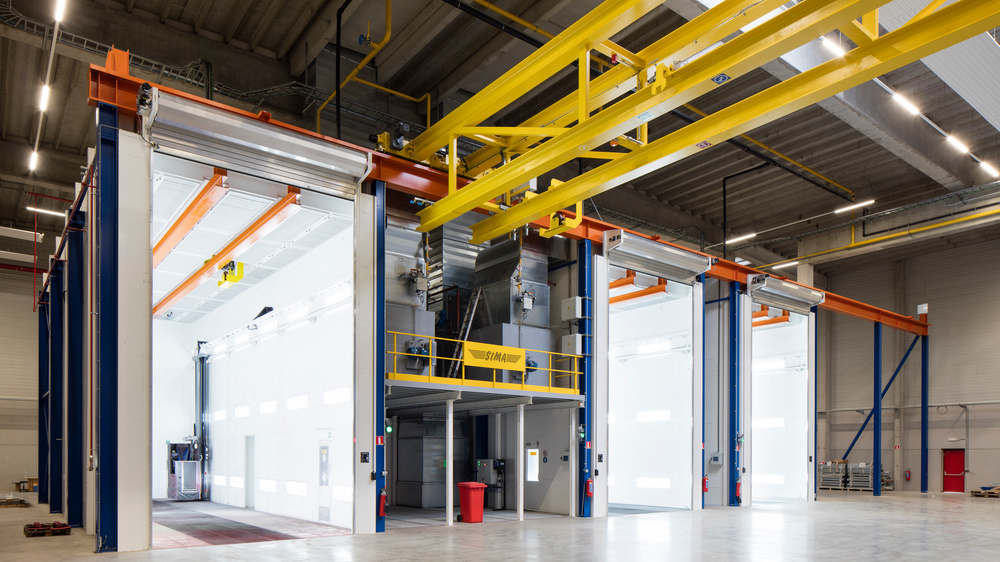
In wet painting and powder coating systems, workpieces must be precisely loaded into paint booths, positioned, and removed again after the coating process. What is crucial here is not only positioning accuracy but also the prevention of vibrations that could impair coating quality. Crane systems often also perform the function of rotating or aligning workpieces to ensure uniform coating of all surfaces.
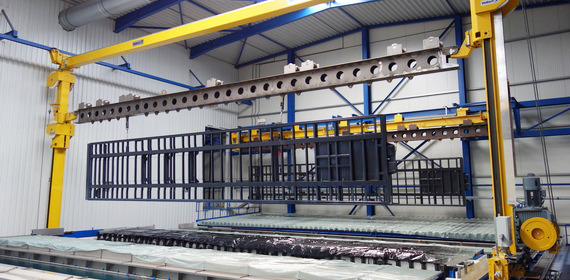
CATHODIC ELECTROCOATING
The KTL system places particularly high demands on immersion speed, dwell times, and withdrawal speed. Immersion or withdrawal that is too fast leads to quality issues; cycles that are too slow reduce throughput. Crane systems must follow precisely programmable lifting profiles while simultaneously operating reliably and continuously in a humid, electrochemically active environment. Corrosion protection on all components is not an option, but a fundamental requirement.
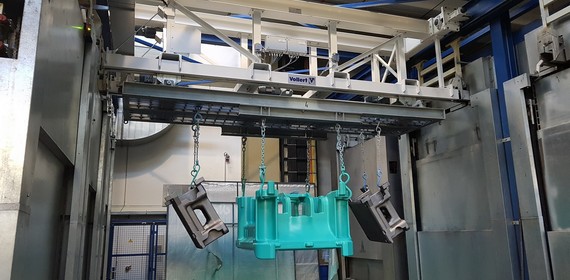
BLASTING AND PRETREATMENT
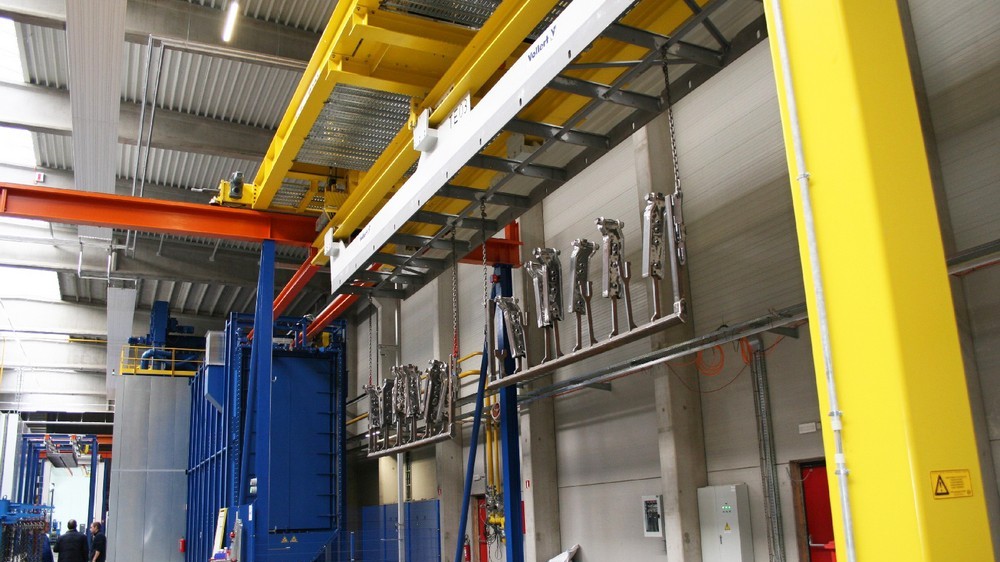
Blasting areas and pretreatment stations are environments subject to particularly harsh mechanical and chemical conditions. Abrasive particles, cleaning media, and pressurized water take a heavy toll on crane systems. These environments require particularly robust designs with enclosed drives, protected runways, and low-maintenance components. At the same time, the cranes must hold the workpieces in defined positions so that blasting nozzles or cleaning units can reach all surfaces evenly.
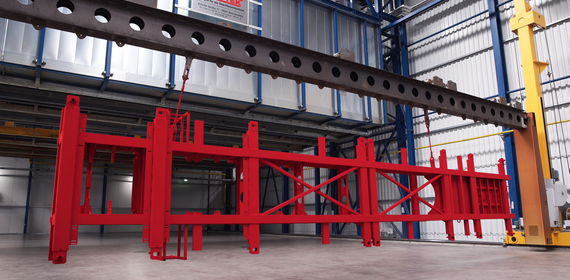
DRYING AND FIRING KILNS
Loading and unloading drying or firing kilns requires crane systems capable of withstanding high temperatures at the transfer interface. Thermal insulation, heat-resistant materials on exposed components, and a control system that accounts for dwell times and temperature profiles are critical here. In these areas, Vollert relies on system solutions that treat crane and furnace technology as a single integrated unit.
Painting, dip coating, and coating facilities are not ordinary production environments. Paint mist, solvent vapors, heat from drying ovens, moisture from pretreatment baths, and electrochemical processes in KTL systems place extreme demands on all components used. Crane systems designed to operate reliably in these environments must be engineered from the ground up for these conditions—not retrofitted.
Added to this is the process logic: In surface treatment facilities, the crane is not merely a means of transport. It is an active part of the process. Immersion speed, dwell times, positioning accuracy when entering paint booths or ovens, and synchronized lifting and lowering of large workpieces—all of these must be precisely controlled. Errors in positioning or timing directly affect coating quality.
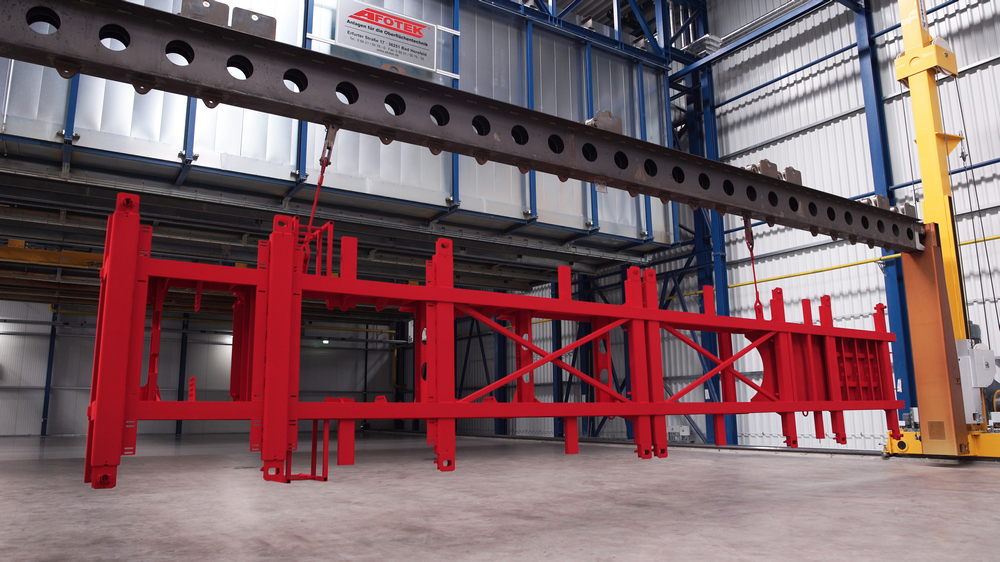
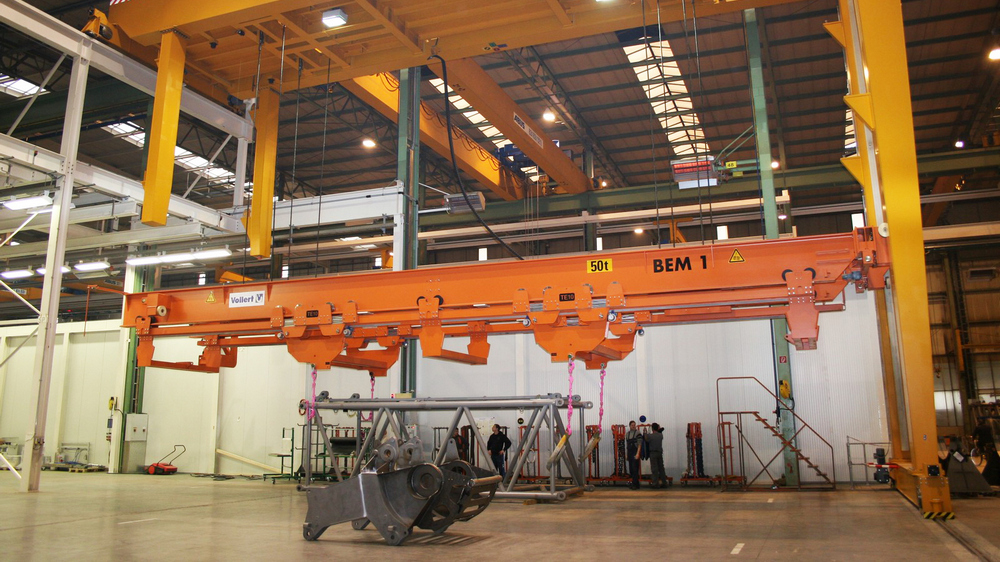
At the same time, workpiece sizes and weights are continuously increasing in many industries. Construction machinery components, commercial vehicle frames, wind energy parts, or large gearboxes can weigh 10, 20, or more metric tons. Crane systems must not only lift these loads but also guide them through the entire coating process without damage, in a repeatable manner, and in sync with the production cycle.
A crane alone does not make for an efficient surface treatment plant. What matters is how the crane is integrated into the overall material flow: How are workpieces loaded? How are buffers organized between process steps? How is the sequence controlled when different workpieces have different dwell times at individual stations?
Vollert does not view these questions as a secondary control task, but rather as an integral part of the system architecture. This means that crane systems, conveyor technology, buffer stations, loading and unloading areas, and the overarching plant control system are all designed together. This results in material flows that not only function technically but also achieve the required throughput, quality, and availability in actual operation.
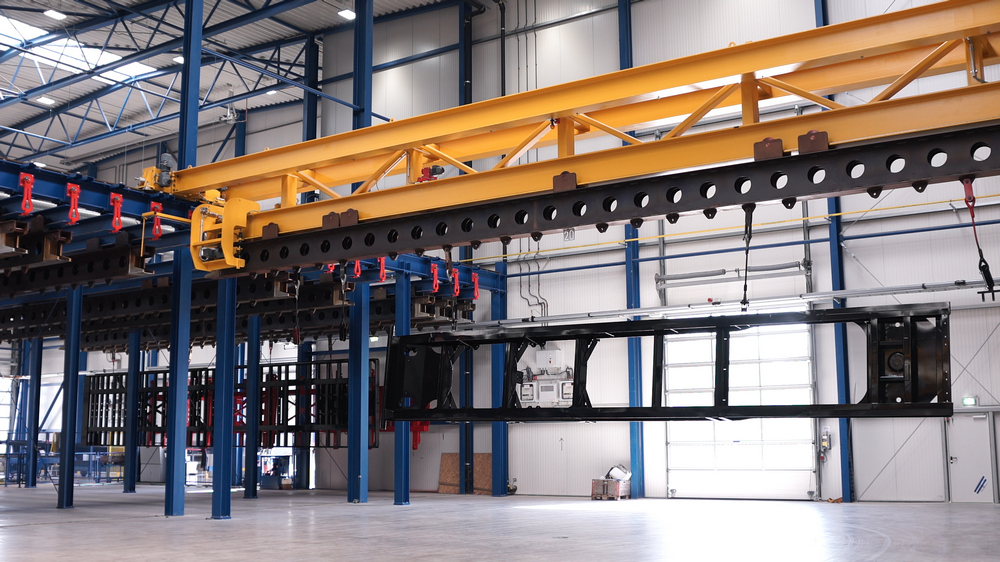
In practice, this often involves the use of multiple crane systems that work in coordination: loading and unloading cranes at the plant entrances, process cranes within the treatment stations, and transfer cranes between plant sections. The control system handles coordination, prioritizes jobs, prevents collisions, and ensures that process times are met.